
January 2026 Edition: Building a Bigger “We” Together
Dear friend,
“We must be able to tell stories that hold the complexity of people and life. But a story that builds a bigger ‘we’ must have place for all groups.” … “An effective belonging story must provide dignity and a future for all people.”
- john a. powell and Stephen Menendian, Belonging without Othering: How We Save Ourselves and the World
“A group, like an individual, has a body structure made up of various members. … In our study of creative dance, we learn to sense not only the requirements of our own individual body but also the requirements of the group body of which we are a part.”
- Barbara Mettler, Materials of Dance as a Creative Art Activity
The beginning of this new year, on a collective scale, has already carried with it deep complexity—more conflict, more tension, and more discord than harmony for many. Observing this through the lens of a dance and movement artist, I sense our collective group body holding strain, fatigue, and pain.
At times, I feel the limits of individual influence in the face of such vastness. And yet, I find myself returning—again and again—to the quiet, grounded teachings of group dance practice. Not as a solution to everything, but as a way of being, listening, and learning how to exist together within complexity.
My teachers—both the lifelong dance mentors who have shaped me and the participants who join us through DanceStream Projects—offer an embodied understanding of what a bigger “we” can feel like. They remind me that this is not a singular act or destination, but an ongoing, emergent practice. A living process of exploration, relationship, and shared presence.
This practice begins with a deep and compassionate inquiry into the self—especially in the places that feel difficult, tender, or unresolved. From there, it gradually invites an expanding awareness of the group body: a shared exploration of how we move, adapt, listen, and act together. How we learn the shape and needs of this “we,” without losing the dignity, voice, and uniqueness of each individual “me.”
The journey toward a bigger “we” can feel overwhelming when viewed in its entirety. So we return to a simpler, steadier wisdom—one consistently offered by our community, from our podcast guests to the older adults, people living with dementia, and care partners who join our programs: none of us walks this life alone, and all we ever truly have is this moment—this now.
What is the action for the next 5 or 10 minutes? What is the next small, human step? These are questions we can meet. And even when the outcomes are uncertain, the act of moving together—however imperfectly—brings us closer to understanding a path forward.
As we take our first steps into this year, my wish for our community is simple and sincere: that we meet ourselves and one another with curiosity, patience, and grace. That we stay willing to discover both our individual needs and our shared responsibilities. And that we allow space for those first steps to be unsteady, learning that even uncertainty can be a form of movement.
In time, this practice expands our individual capacity to feel, connect, and respond—and, I hope, gently mirrors the emergence of a new group understanding: a wider, more compassionate, and more inclusive “we.”
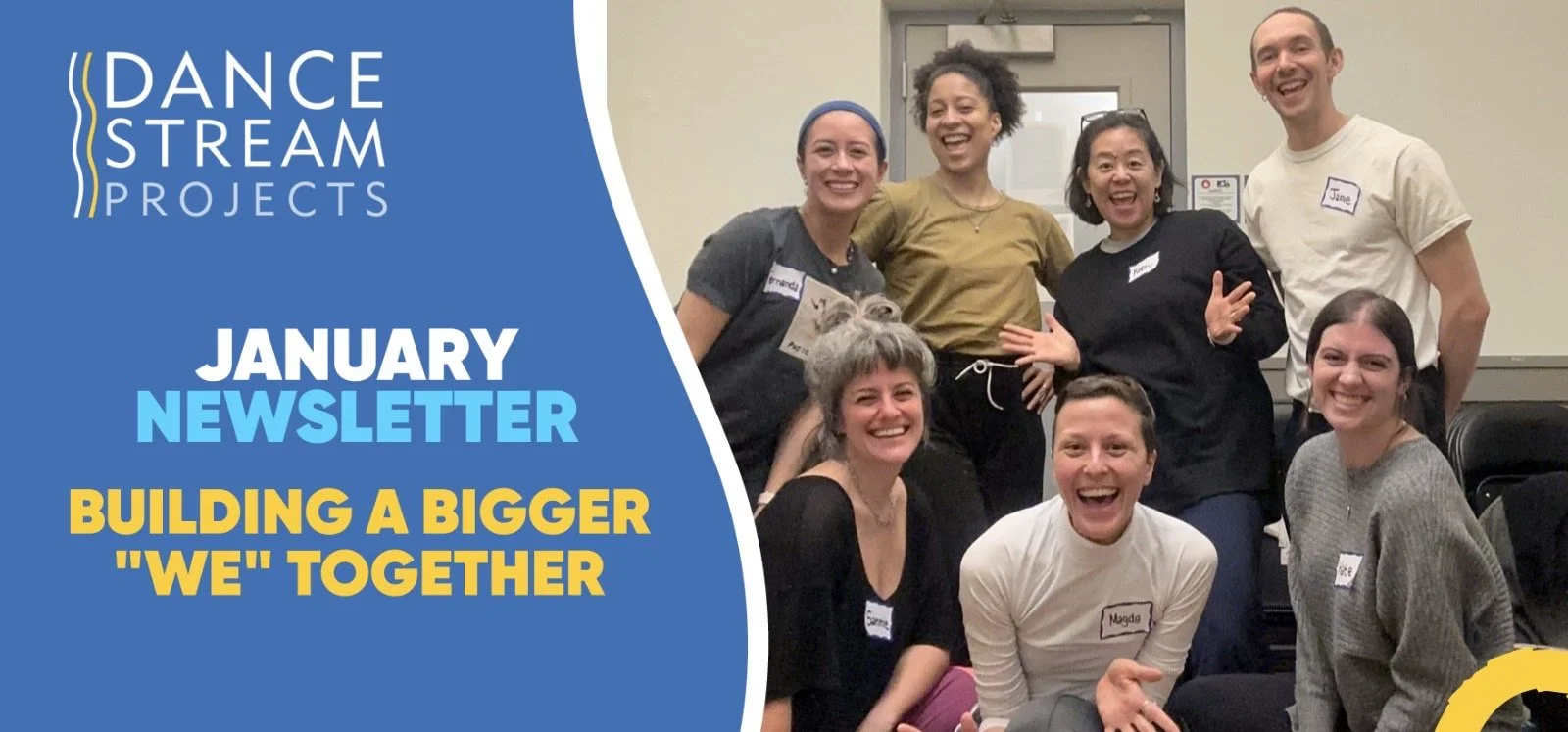
This month, we invite you to welcome four new teaching artists into the DanceStream Projects team, learn about our inaugural teacher training, reflect with us on the first season of the Dancing into Brain Health Podcast, and join us for the launch of Season Two.
Above all, we invite you to dance with us—whether in person or online—in spaces where we practice the simple, powerful act of being in a group body together.
In solidarity,

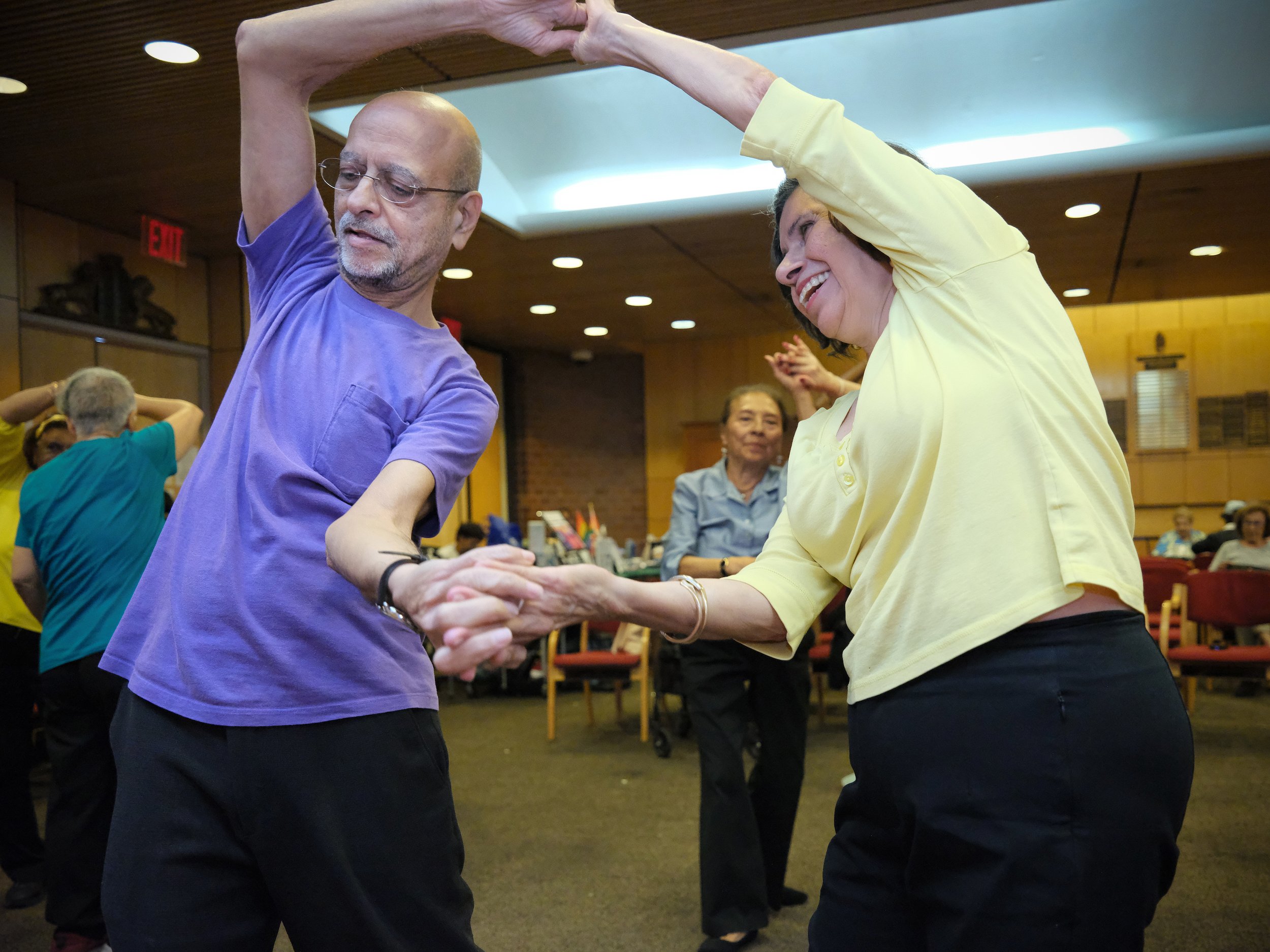
Photo credit: Nuria Rius