
Dancing into Brain Health (S2 Ep10): Illuminating the Social Brain
The human brain is arguably the most complex organ in the body. Yet one of its most remarkable achievements is something we do every day without thinking: connecting with other people.
The moment we recognize a friend's smile, sense the frustration in a stranger's voice, comfort someone who is grieving, or find ourselves moved to tears by a piece of music, our brains are performing an extraordinary social dance. We are constantly reading emotions, sharing experiences, responding with empathy, and building relationships that shape not only our lives, but also our health and well-being.
But what exactly is the social brain? How does the brain make empathy, compassion, and emotional connection possible? Why do moments of awe—a breathtaking sunset, a powerful dance performance, or a shared moment of laughter—have such a profound impact on how we feel? And how do these abilities change when someone is living with a neurodegenerative condition or experiences the world through a different kind of brain?
Our guest today has dedicated her career to answering these questions.
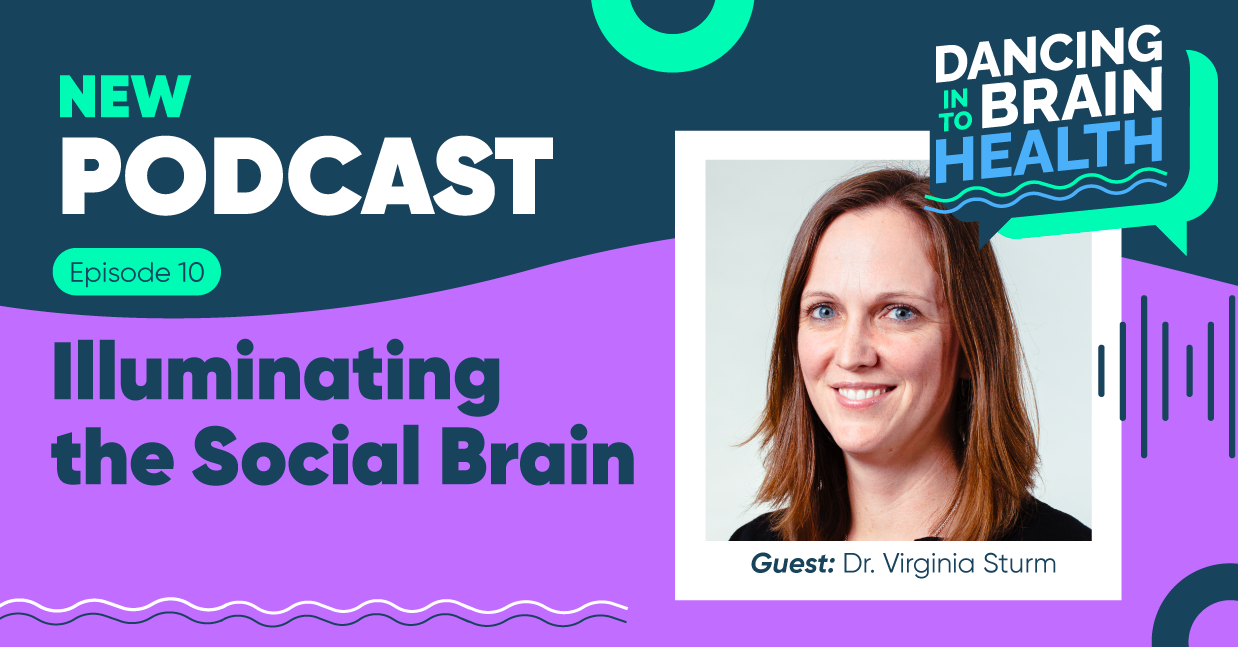
Dr. Virginia Sturm is the John Douglas French Alzheimer's Foundation Endowed Professor at the University of California, San Francisco, where she is Professor in the Departments of Neurology and Psychiatry and Behavioral Sciences and Director of the Clinical Affective Neuroscience Laboratory. Her pioneering research explores the neural systems that support emotion, empathy, and social behavior across neurodegenerative diseases and neurodevelopmental conditions, helping us better understand not only how the social brain works, but how we can nurture it throughout our lives.
In this conversation, we explore what the social brain is and why it matters for all of us. We discuss how emotions arise in the brain, why empathy is both deeply personal and profoundly biological, how emotional experiences can shift in conditions such as Alzheimer's disease and frontotemporal dementia, and what these changes can teach us about being human.
We also turn toward hope. Together, we explore the growing science behind practices that strengthen our social and emotional well-being—from engaging in the arts and creative movement to cultivating moments of wonder through experiences of awe. Because if our brains are built for connection, then every opportunity to move together, create together, and experience beauty together may also be an opportunity to support brain health.
Listen here
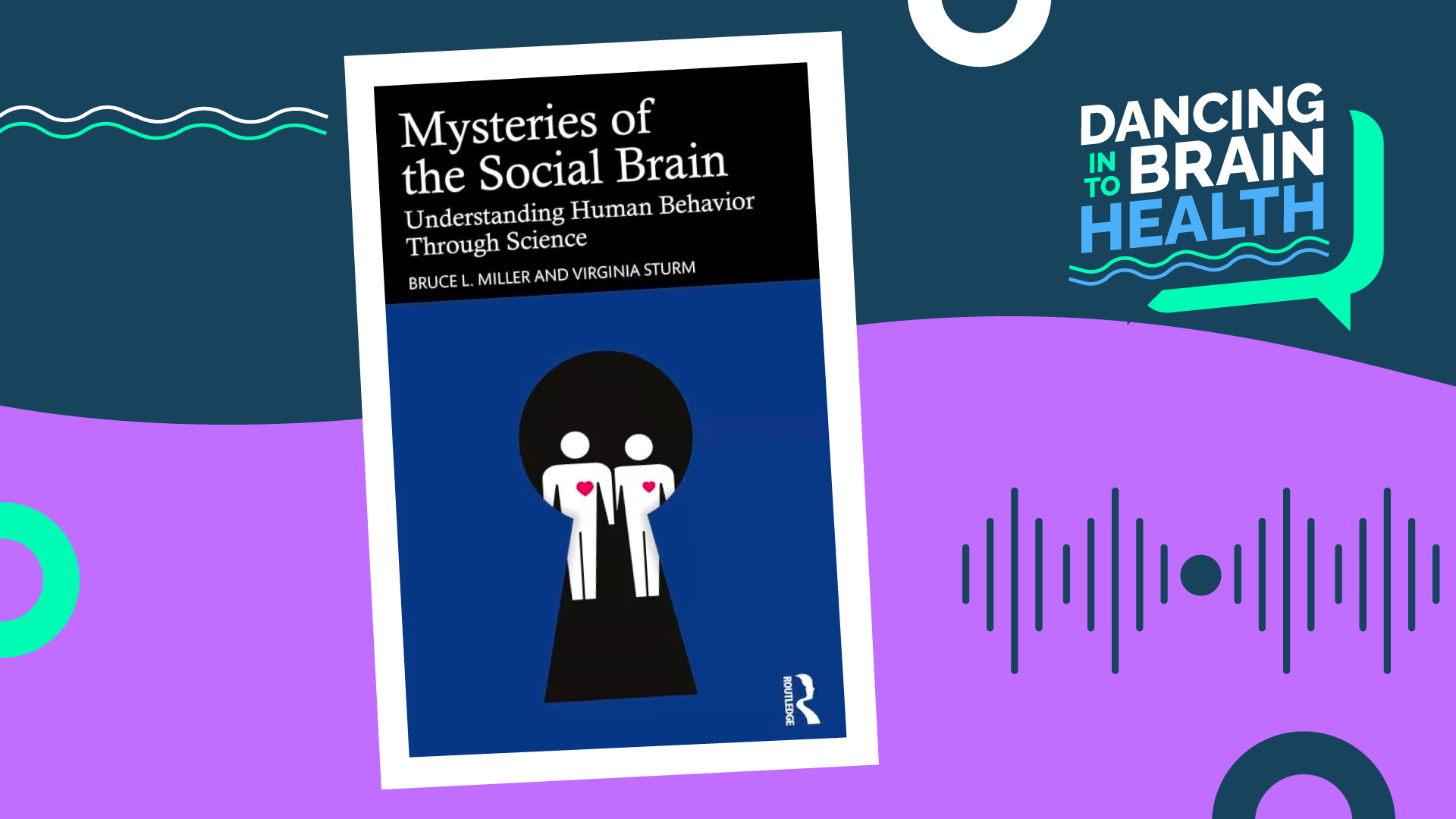
Find the link to Dr. Sturm’s book in show notes below.
Listen to Season 2, Episode 10 : Illuminating the Social Brain on Spotify, Apple Podcasts and YouTube.
Learn more about Dr. Virginia Sturm
https://www.gbhi.org/profiles/virginia-sturm
Read and watch more:
Mysteries of the Social Brain: Understanding Human Behavior Through Science (Routledge)
Dynamic emotion fabric theory: a new framework for understanding the biology of flexible emotion states. (Social Cognitive and Affective Neuroscience)
Empathy Without Boundaries (New York Times)
[Dr. Sturm and her work on Frontotemporal Dementia are featured in this new book.] The Vanishing Family: Love, Fate, and the Quest to End Dementia by Robert Kolker (New York Times best-selling author)
Children with dyslexia show stronger emotional responses (Science Daily)
"The Other Side of the Brain" Part 6: Virginia Sturm (YouTube)
An ‘Awe Walk’ Might Do Wonders for Your Well-Being (New York Time)
Big smile, small self: Awe walks promote prosocial positive emotions in older adults (Emotion)
This episode of Dancing into Brain Health was edited and produced Magda Kaczmarska and Hilary Brown-Istrefi. The music for this show is the title cut from the album, Critical Path by Joe Venegoni and Carl Weingarten.
ABOUT DANCING INTO BRAIN HEALTH PODCAST
Join host Magda Kaczmarska, dancer, researcher, Atlantic Fellow for Equity in Brain Health and executive director of arts and health nonprofit, DanceStream Projects, in uncovering the interconnections of dance, brain health and community. Each episode Magda brings together leading researchers, artists, advocates and thought leaders to illuminate the magical interconnections of dance and brain health and explore their influence on all aspects of our lives.
* New Episodes every month! *
Follow us on IG: @ dancestream_projects and YouTube: @dancestreamprojects
or email us at: magda@dancestreamprojects.com